Case study
The Wonderland Wedding
A four-day story, told in one visual language.
Five events. Four venues. One thread running quietly beneath all of it.
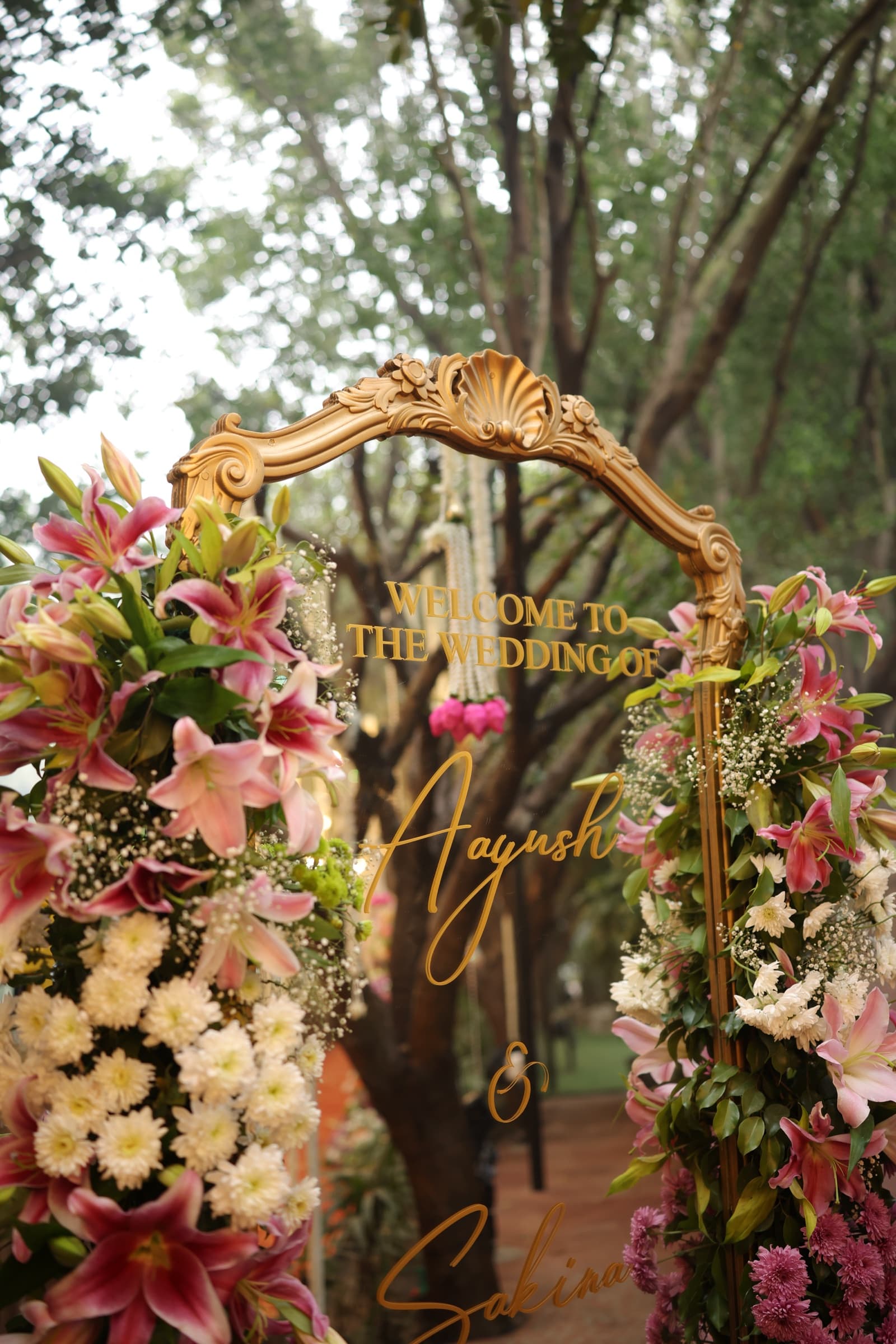
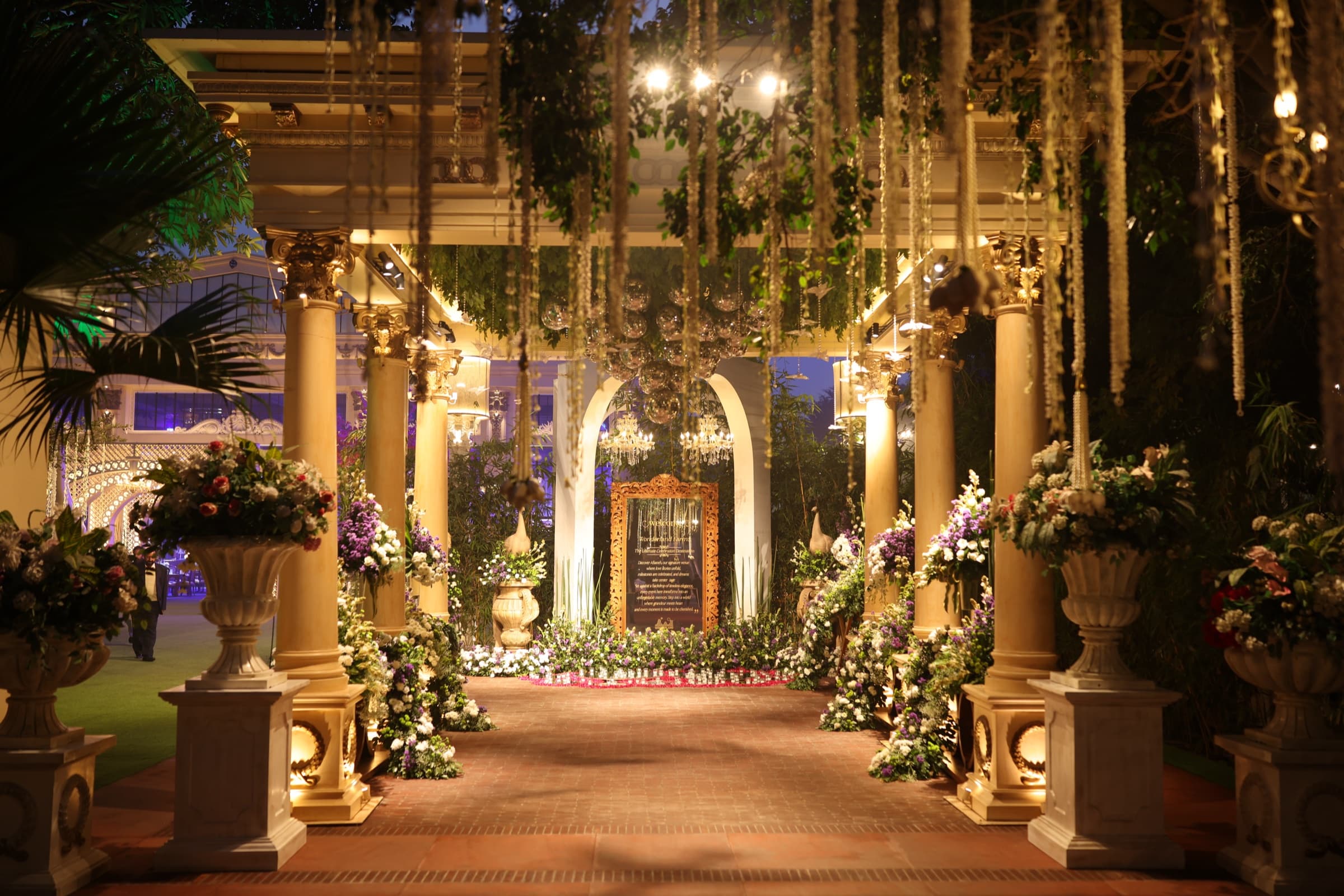
Sakina and Aayush planned their wedding from Vancouver and carried it home to Jalandhar—a haldi at sunrise on a garden terrace, a mehendi bazaar on the rooftop of Taj Villa, an evening of cocktails at the Ramada, and finally, a wedding and reception staged across two entirely different worlds within Wonderland Farms: The Island and Afsaneh. Four spaces, four moods, four chances for the story to fracture into unrelated moments.
It didn’t, because of water.
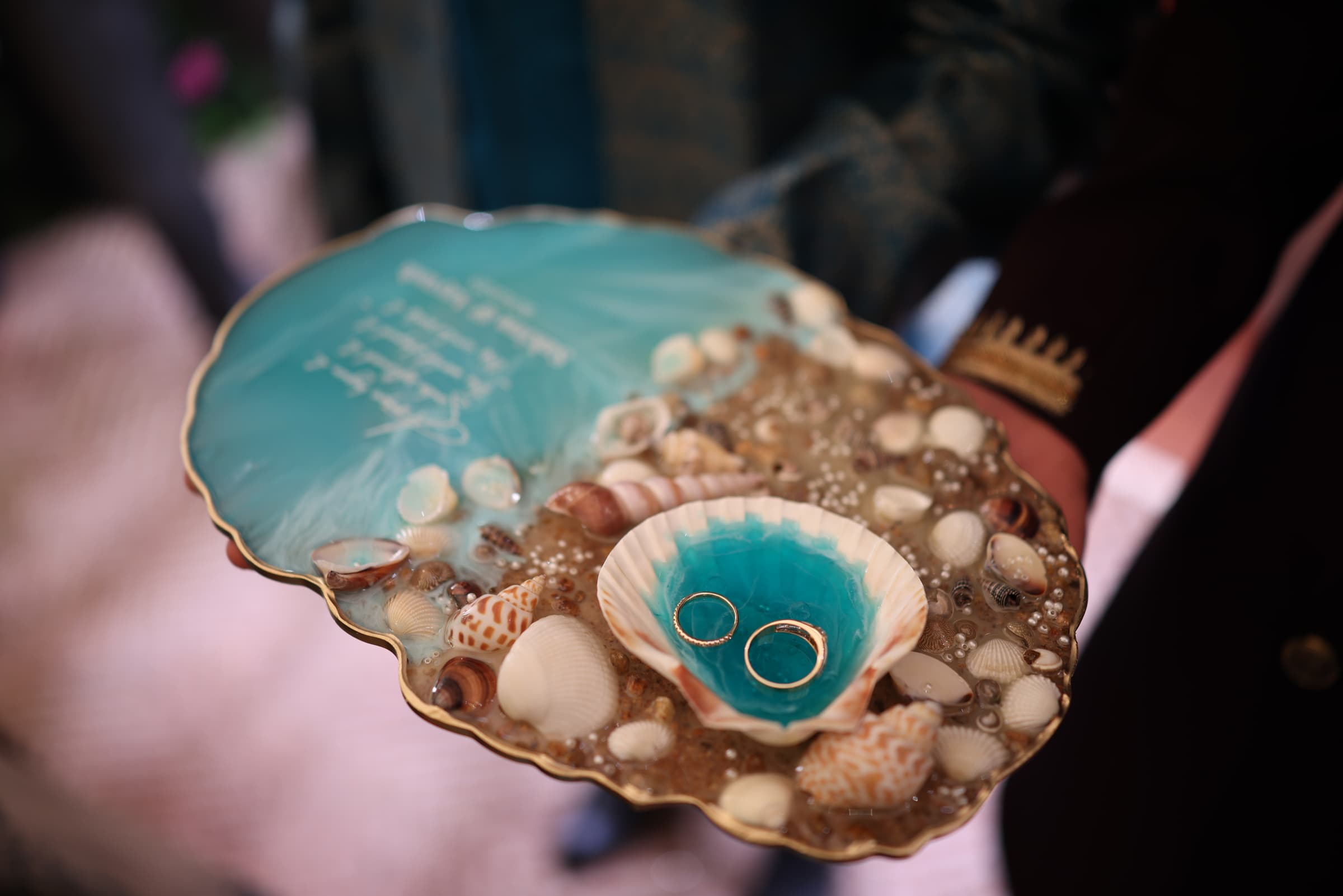
Sakina and Aayush share a real, long-standing love for the ocean, and rather than treat it as a single day’s theme, they let it become the language the entire celebration spoke in. At The Island, they stood before a waterfall cascading behind the mandap, dressed in shades of blue, guests in a dress code drawn from the sea, exchanging rings from a platter styled entirely around ocean motifs. Sakina’s haldi jewelry was shaped from shells. By the time the reception arrived at Afsaneh, the thread hadn’t broken—it had simply changed rooms, resurfacing in blue light washing the walls and waves moving silently across every screen.
The brief, in the end, was simple to state and harder to hold: design an identity delicate enough to move through four venues and five distinct moods and strong enough that no guest ever felt the story had shifted rooms.
Day one · Haldi
Marigold, by way of memory.
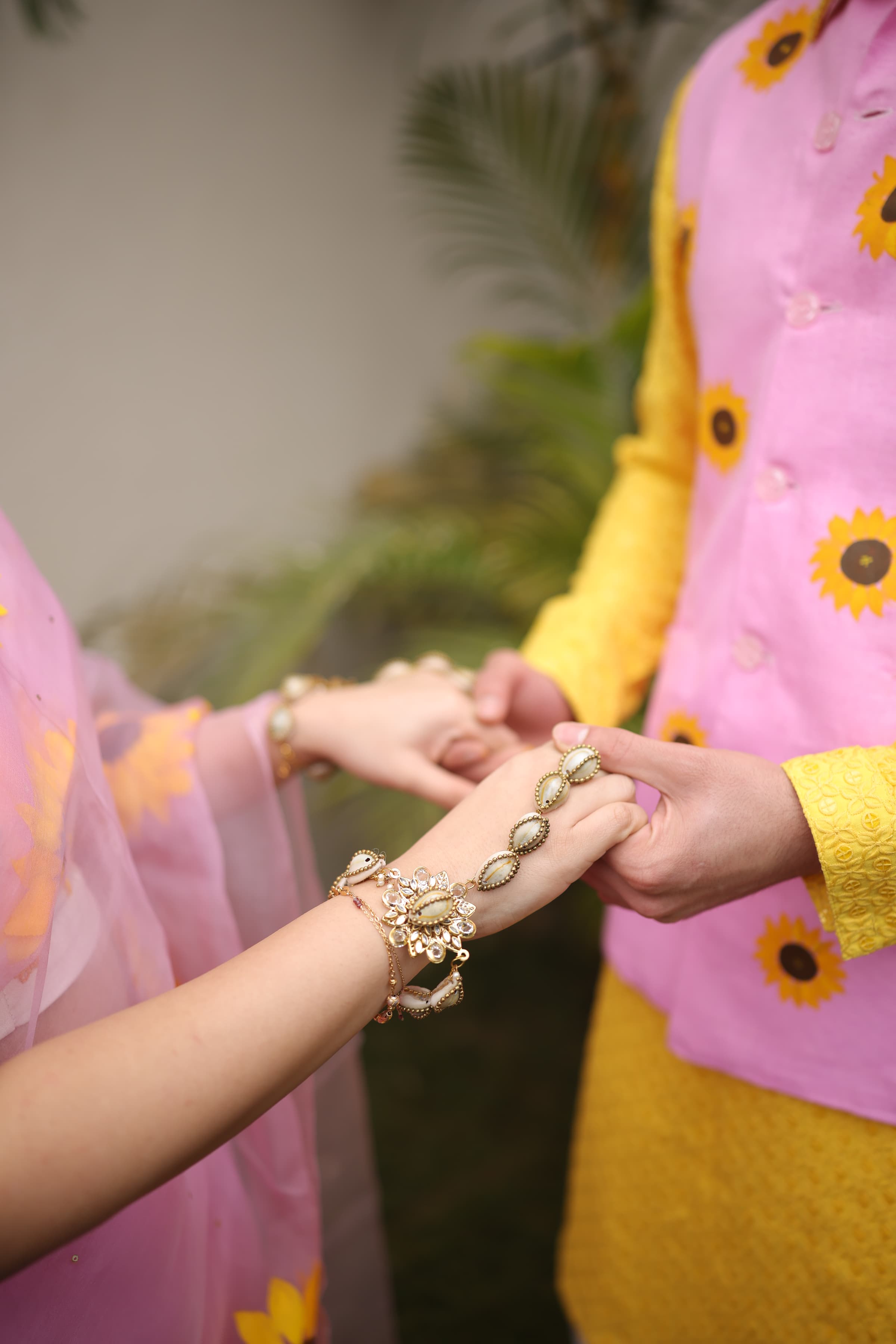
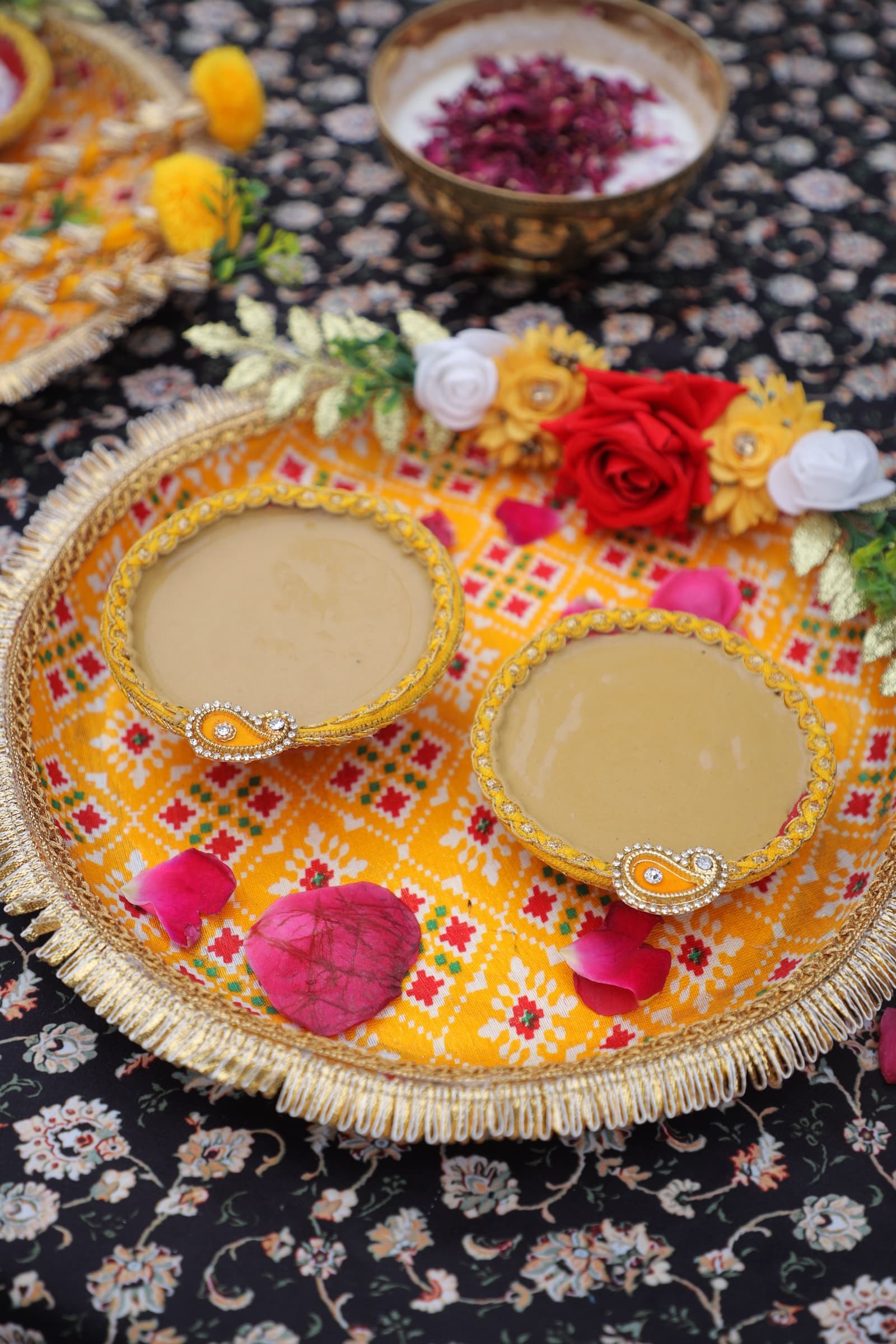
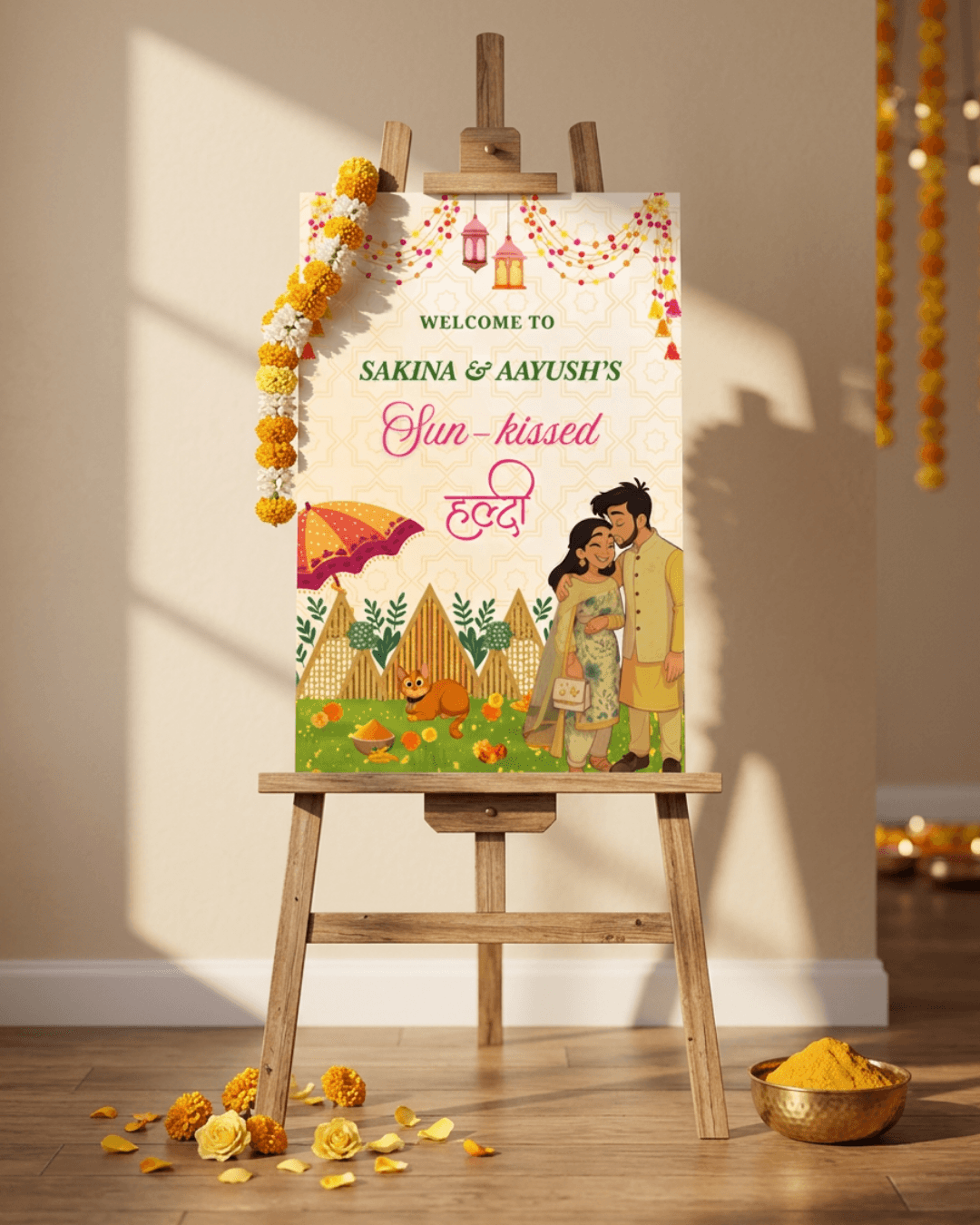
Most haldis are drenched in yellow. This one wasn’t. We built the palette around pink and yellow, roses alongside marigolds, warmth without cliché, and let the couple’s handpainted sunflower outfits and shell jewellery set a sun-soaked tone. For the guests, a magic haldi board invited everyone to dab marigolds dipped in haldi paste onto a canvas, slowly revealing a hidden portrait of the couple beneath, a small ritual disguised as play.
Day one · Cocktail Party
A night under the moon.
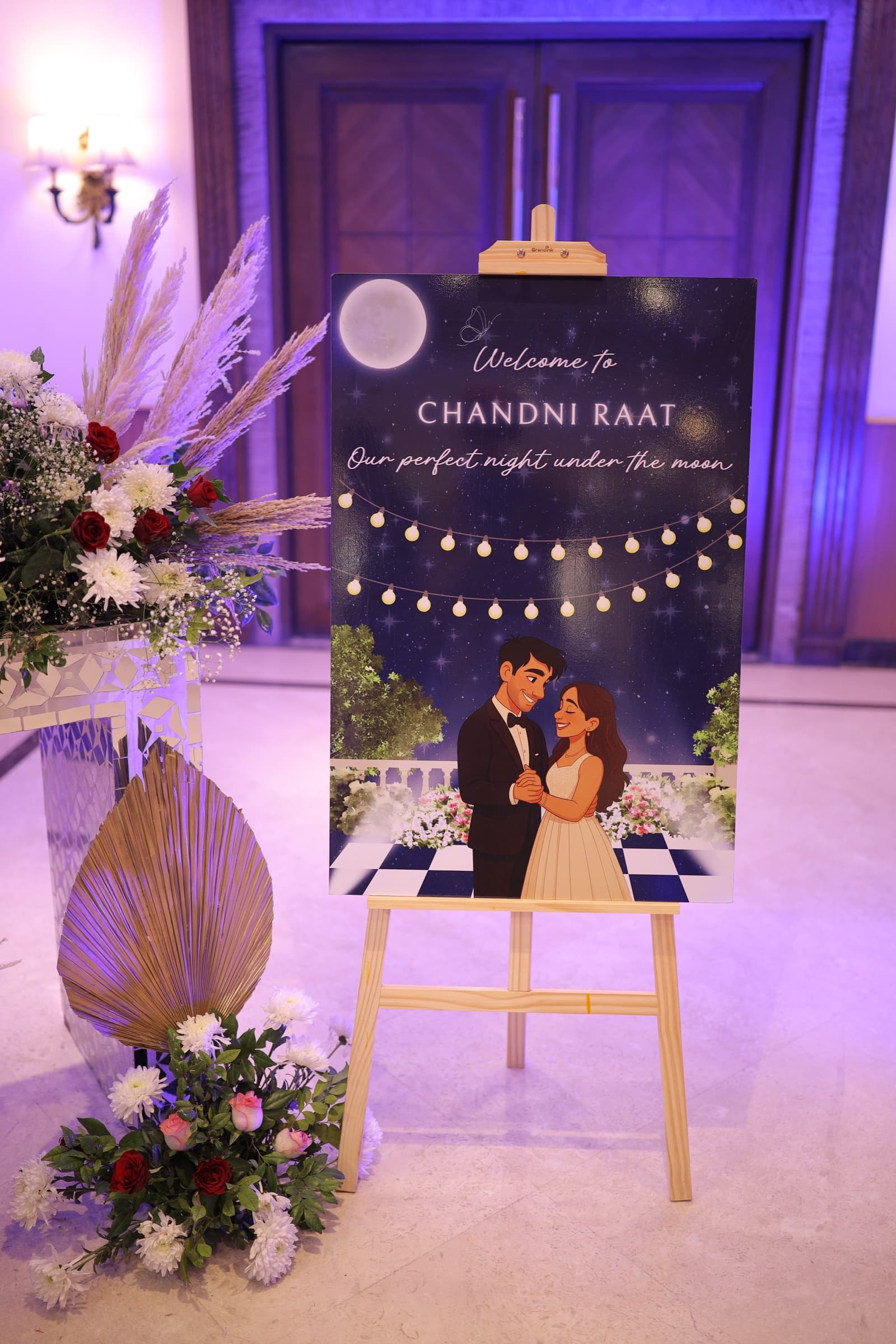
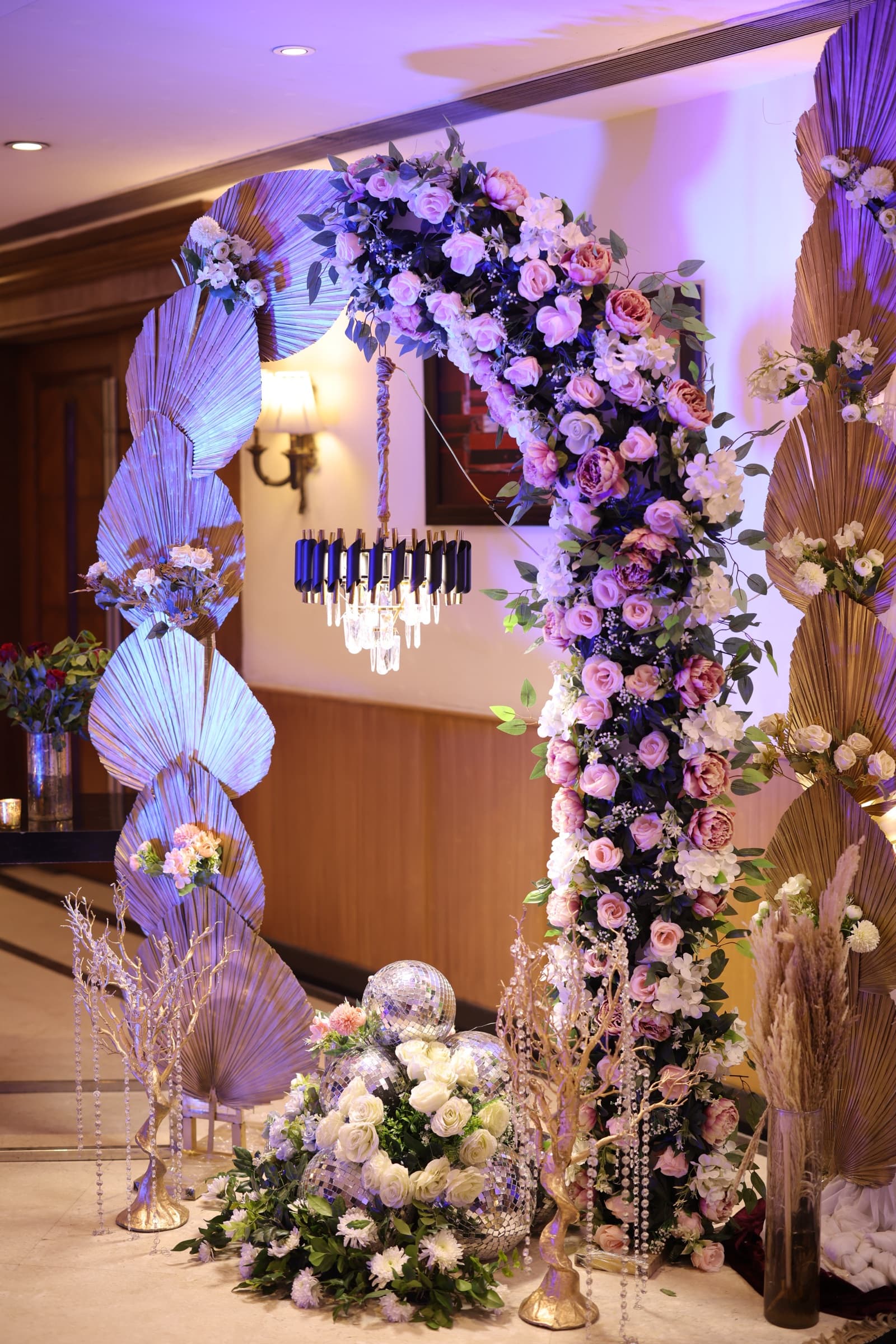
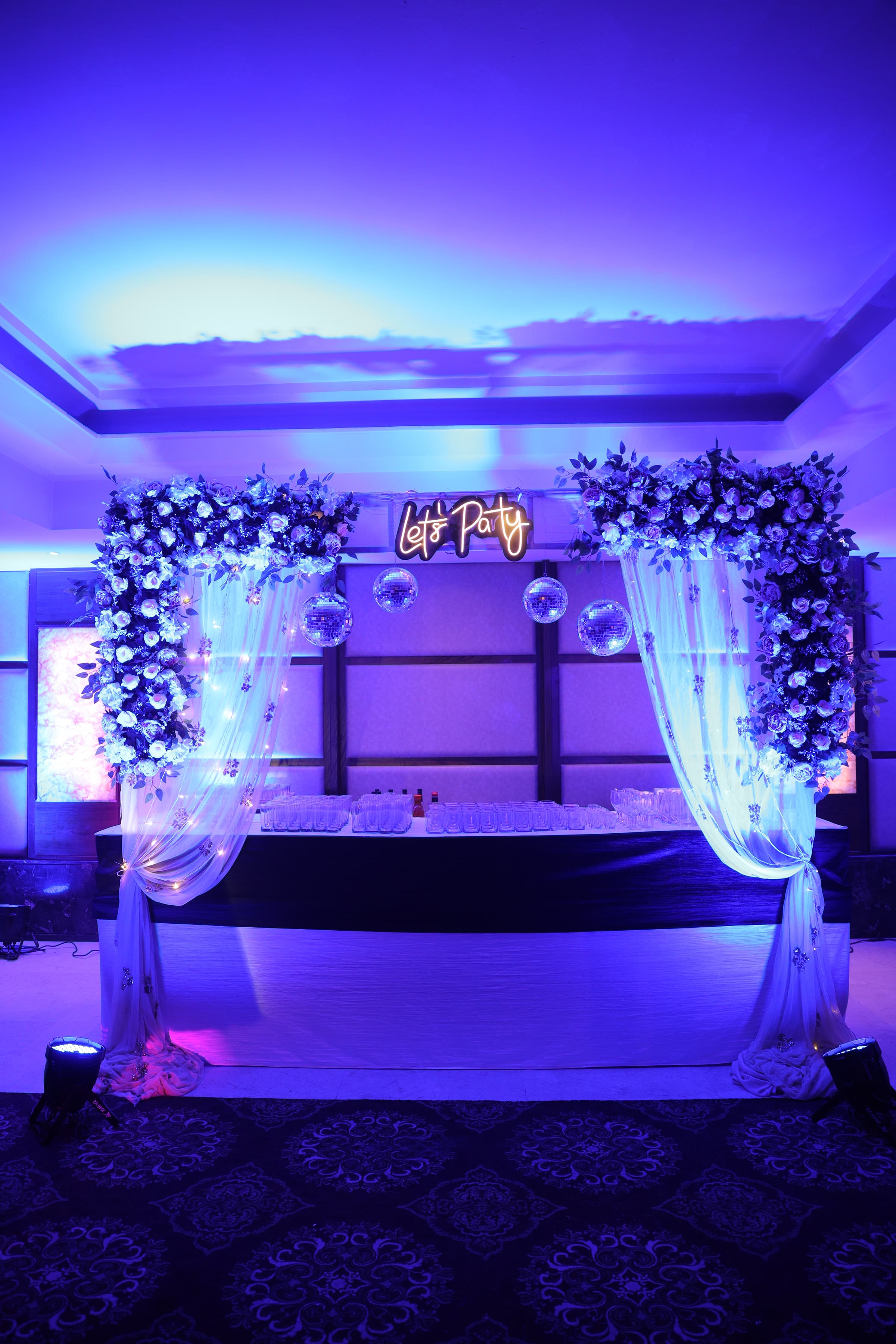
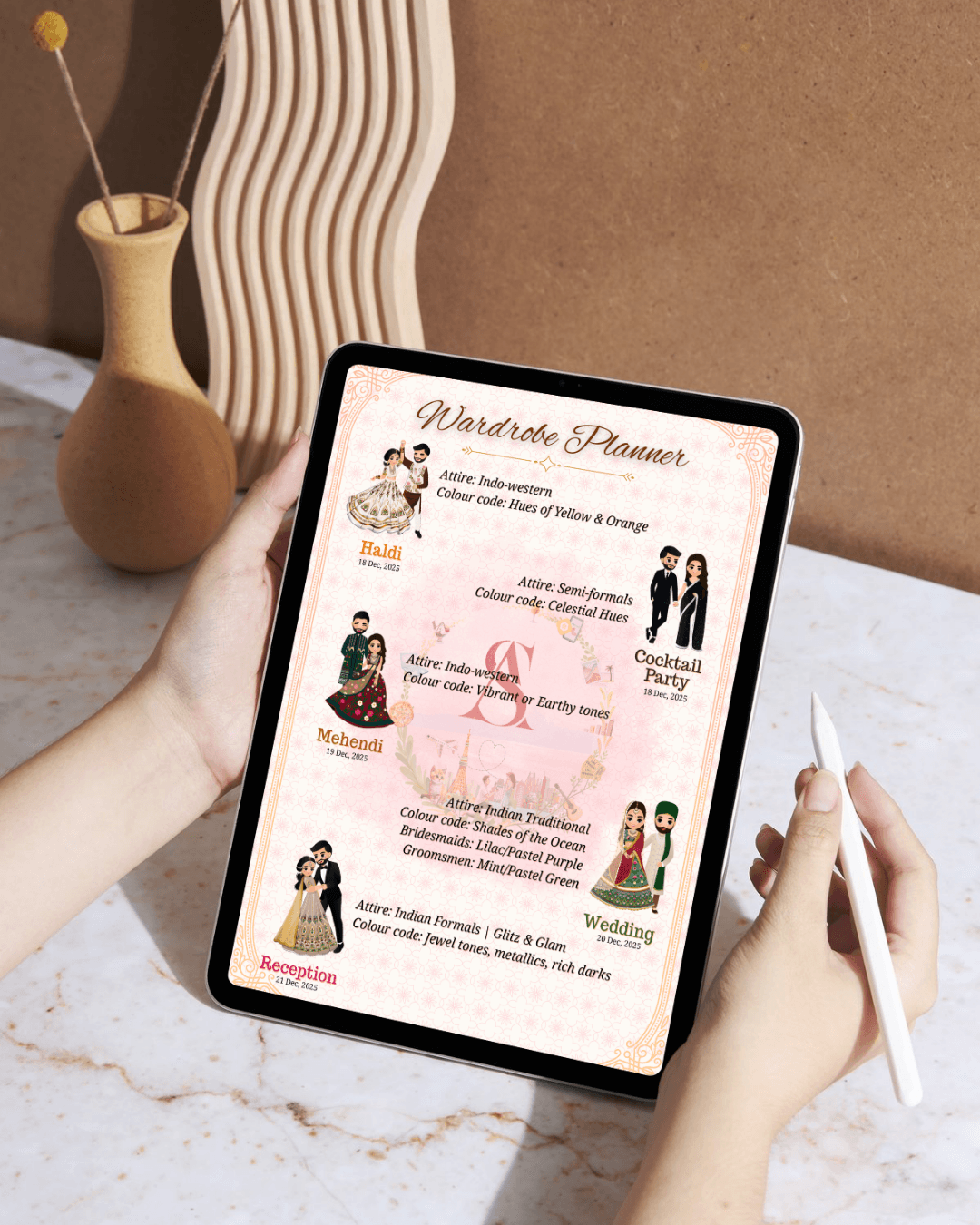
By evening, the mood shifted entirely. The cocktail party moved to Ramada Jalandhar, and the palette flipped from sun-kissed warmth to celestial darkness, guests in blacks and deep hues, the energy DJ-driven and dance-floor-first, with a couple’s game played on glowsticks keeping the night loose. At the entrance, the “Chandni Raat” welcome board, deep navy, strung with lights, told guests before they walked in: this is a different chapter.
Day two · Mehendi
A bazaar of small joys.
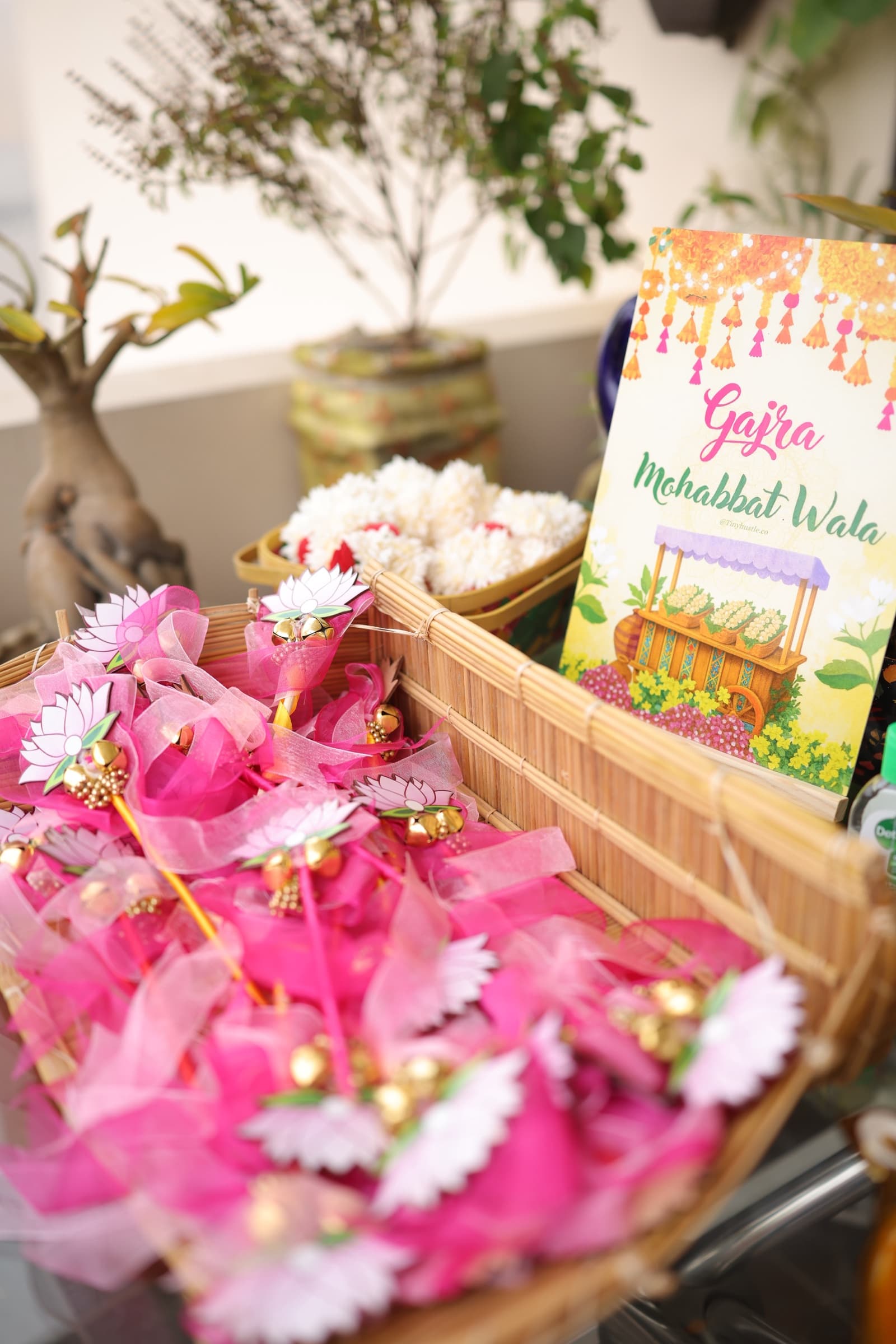
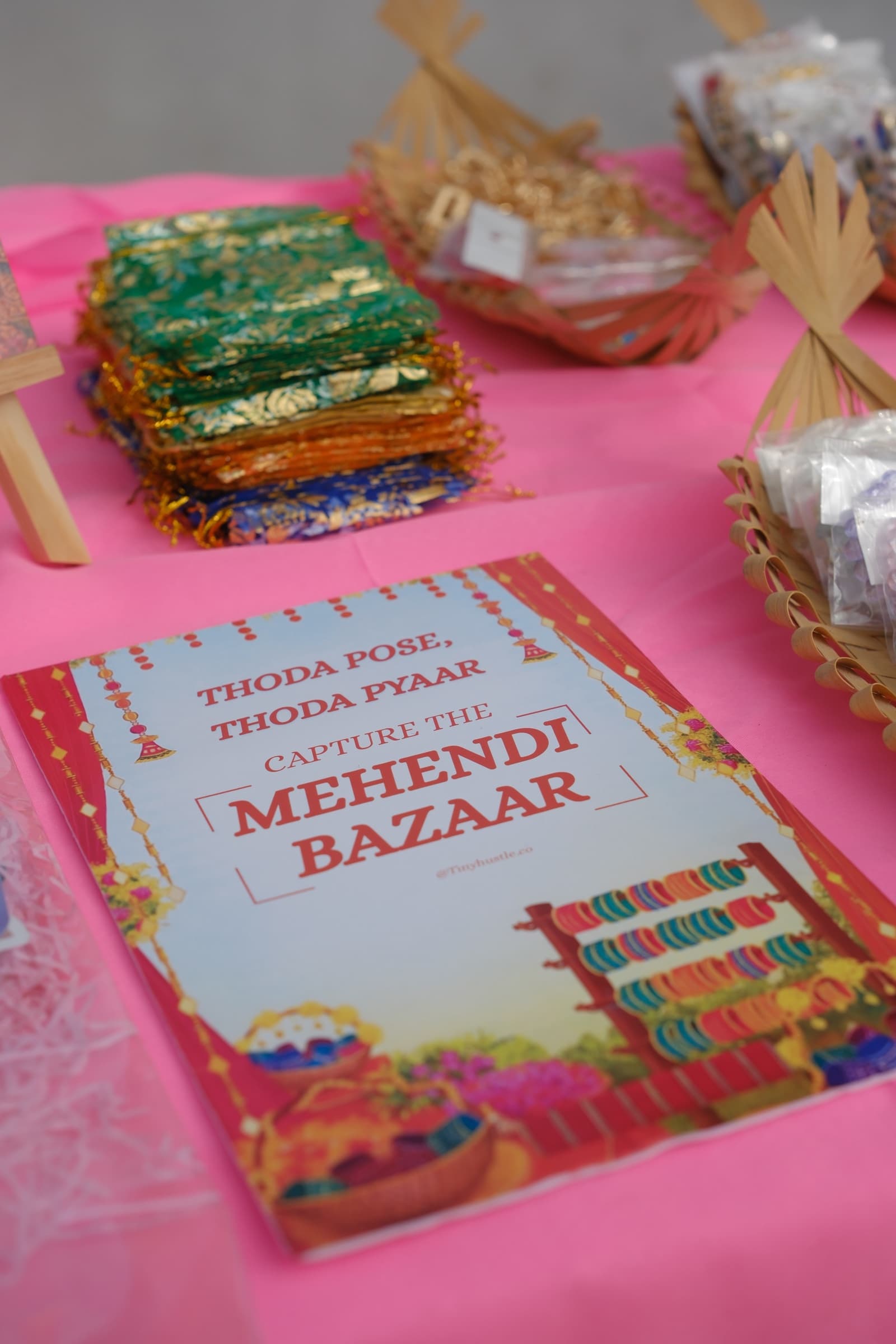
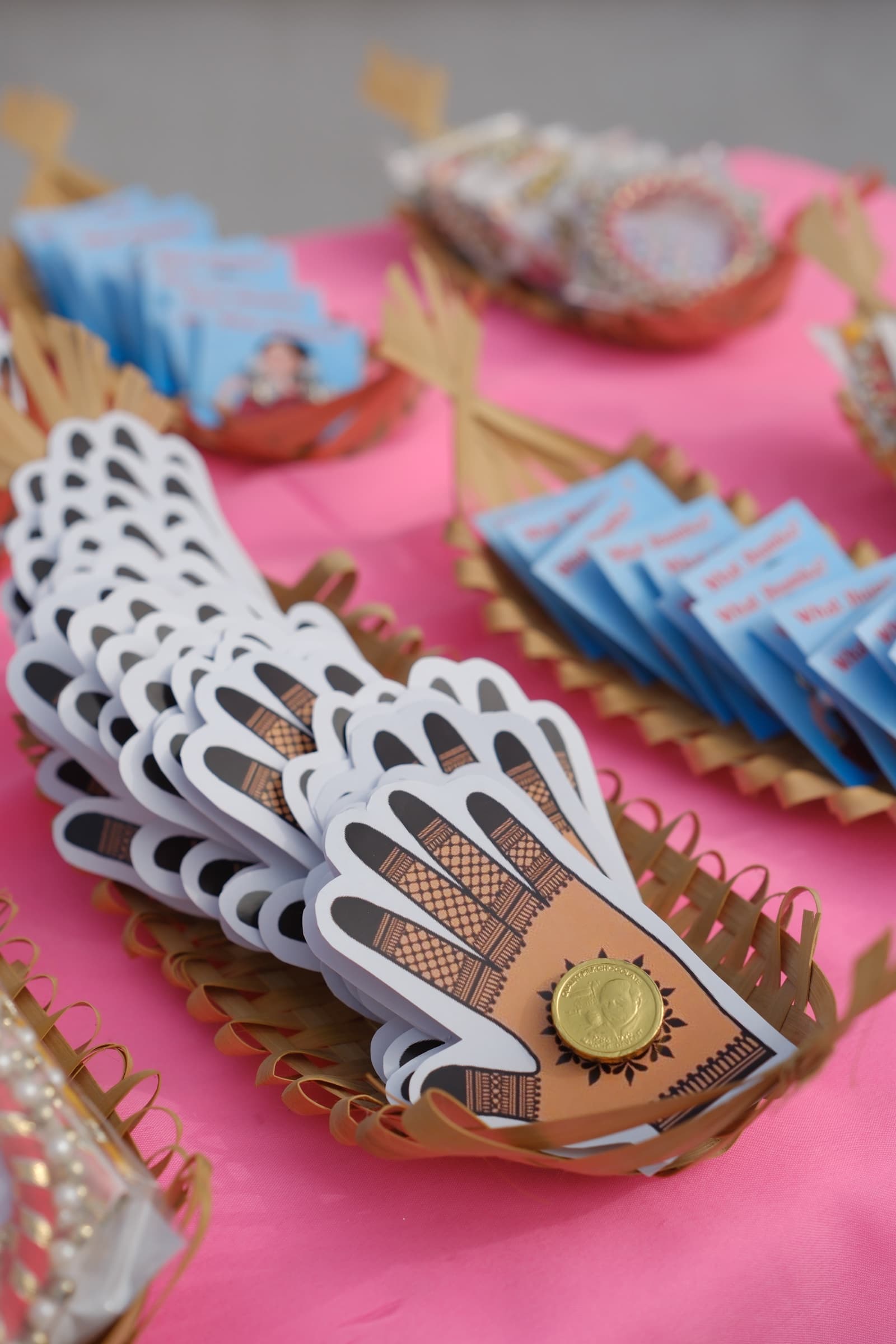
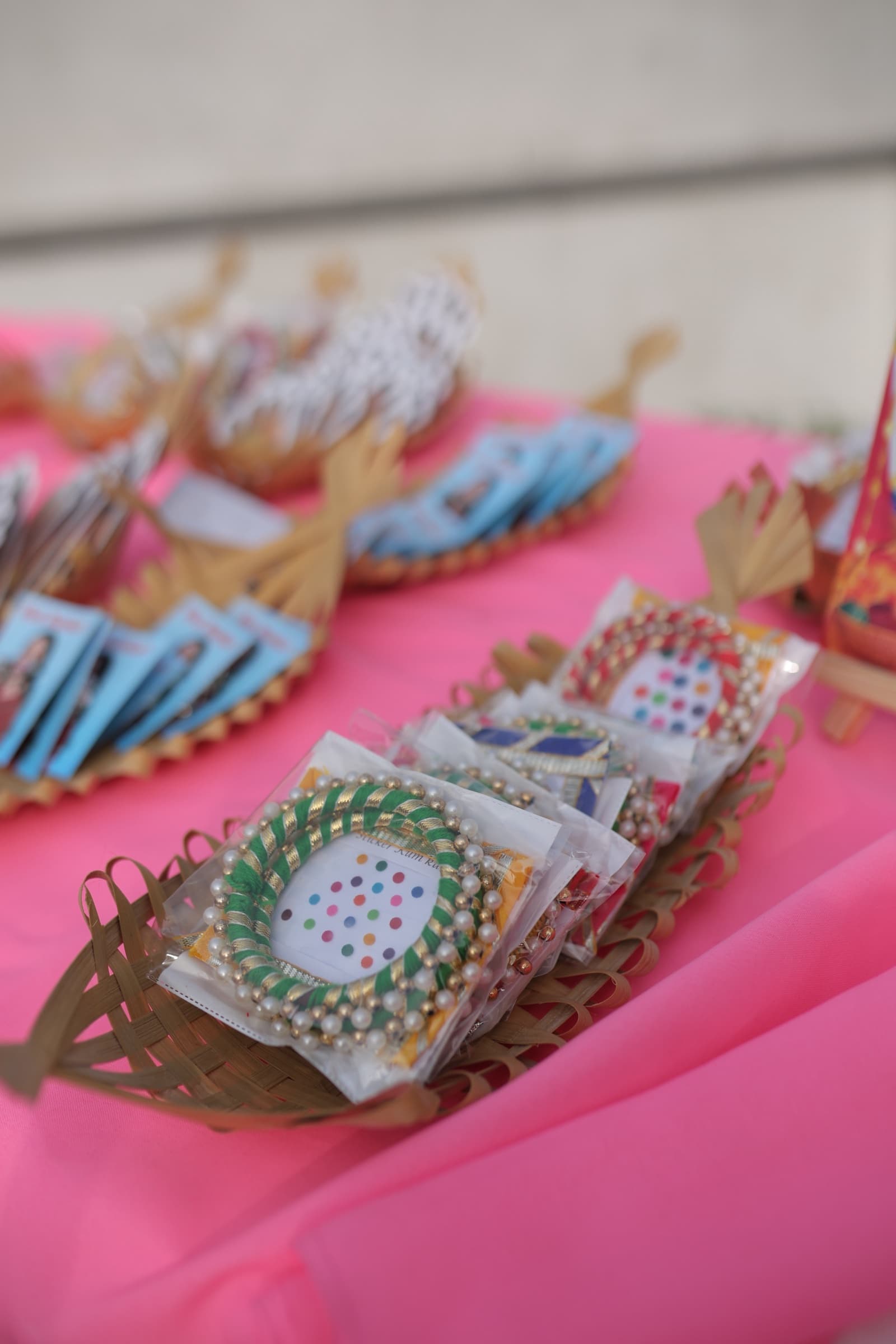
Most mehendis use a single statement wall. We designed this one as a mela instead, guests moving between stalls of bangles, clips, earrings, and favours. The henna artist was brought in specially from Delhi, sought out for a bridal style intricate enough to earn the trip. A gifting ceremony anchored the afternoon, family and friends presenting gifts to the bride.
Day three · The wedding
Where the waterfall met the mandap.
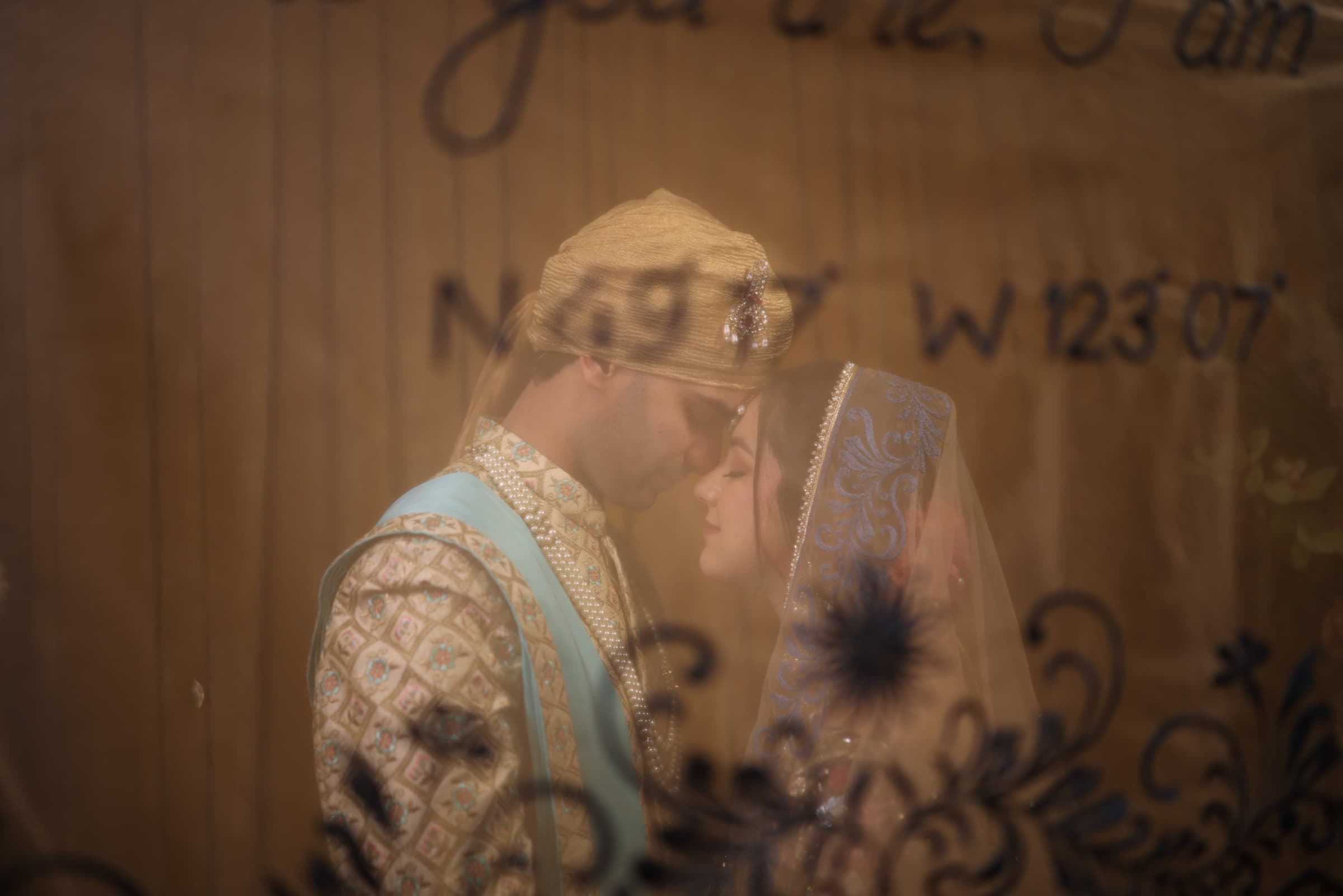
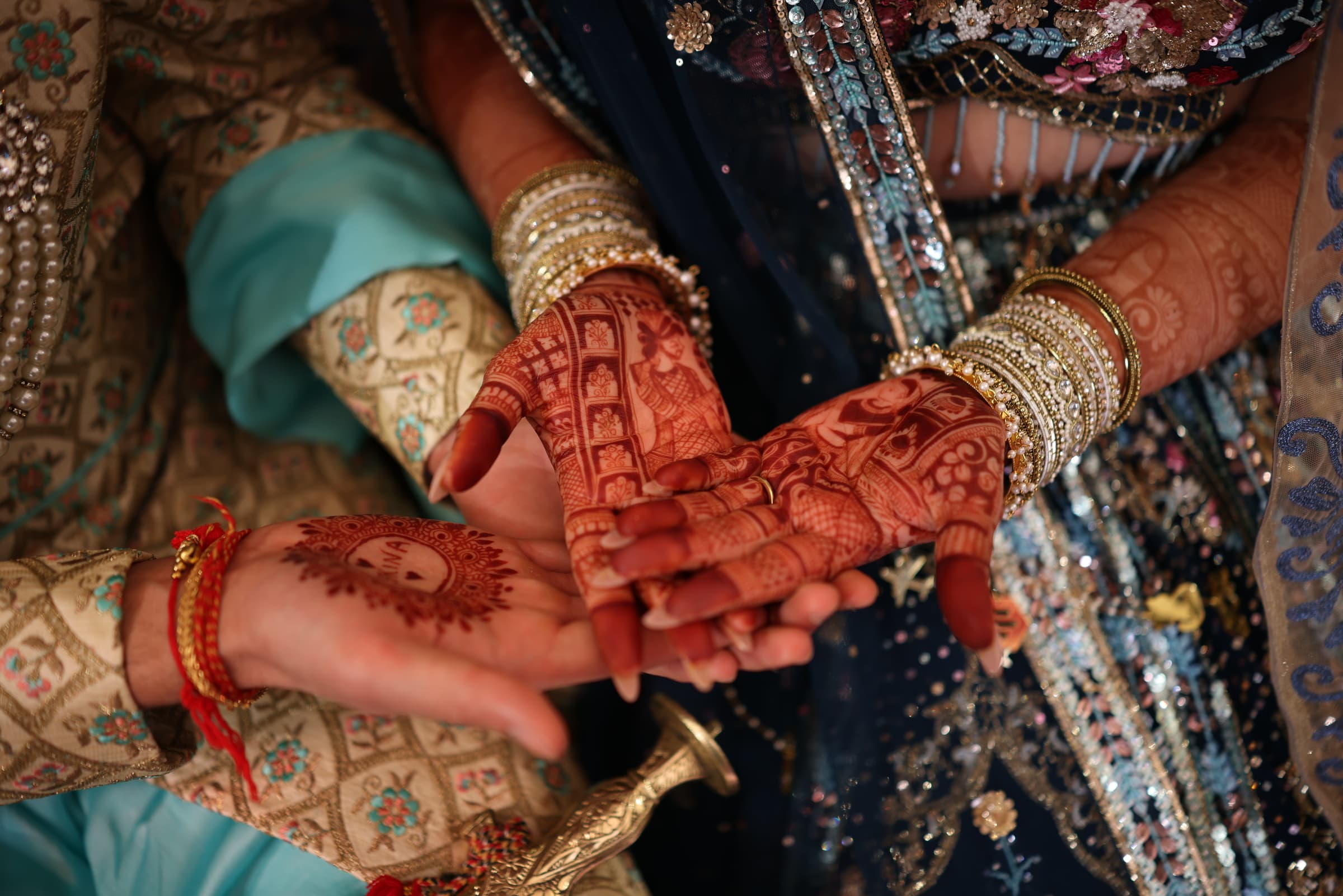
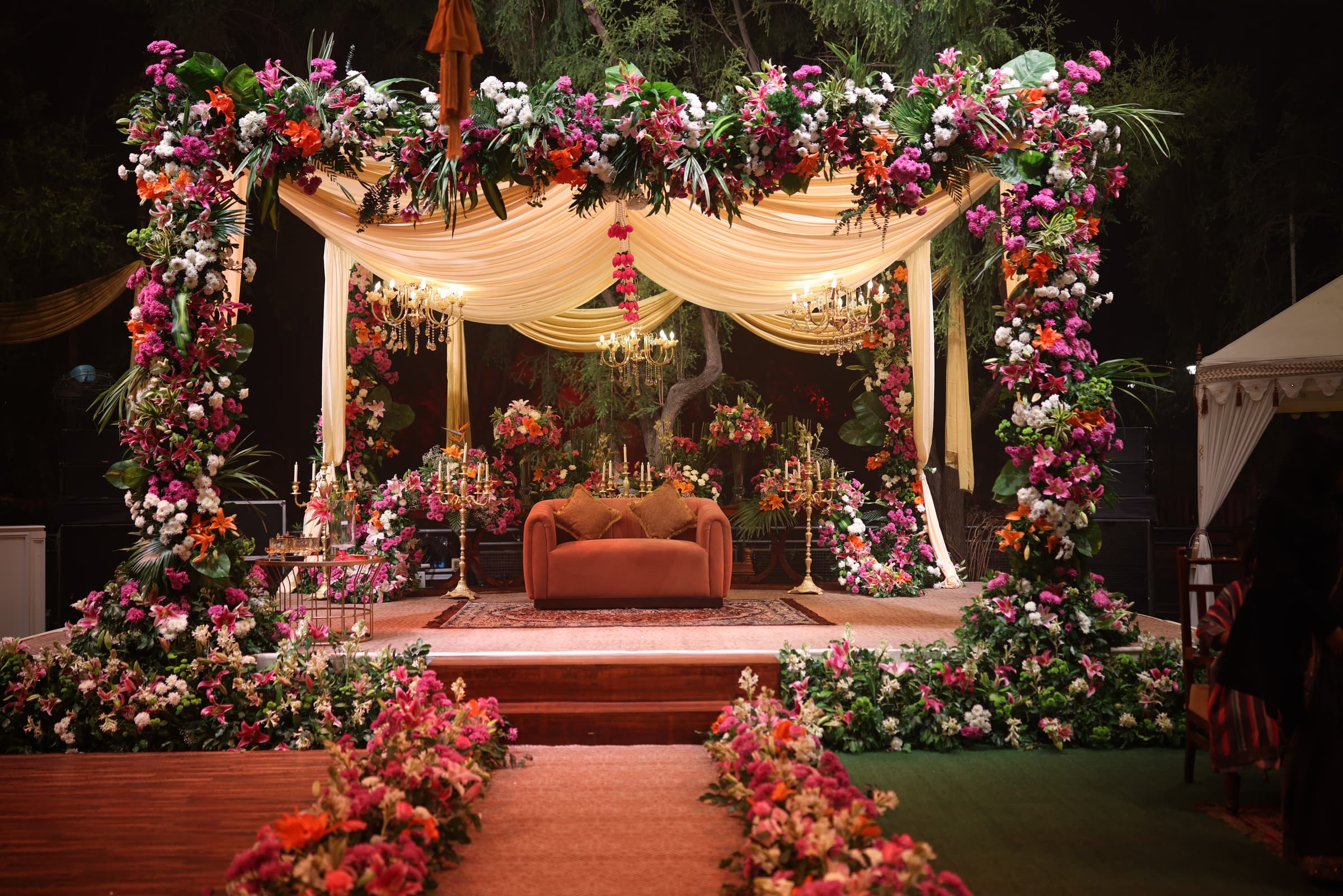
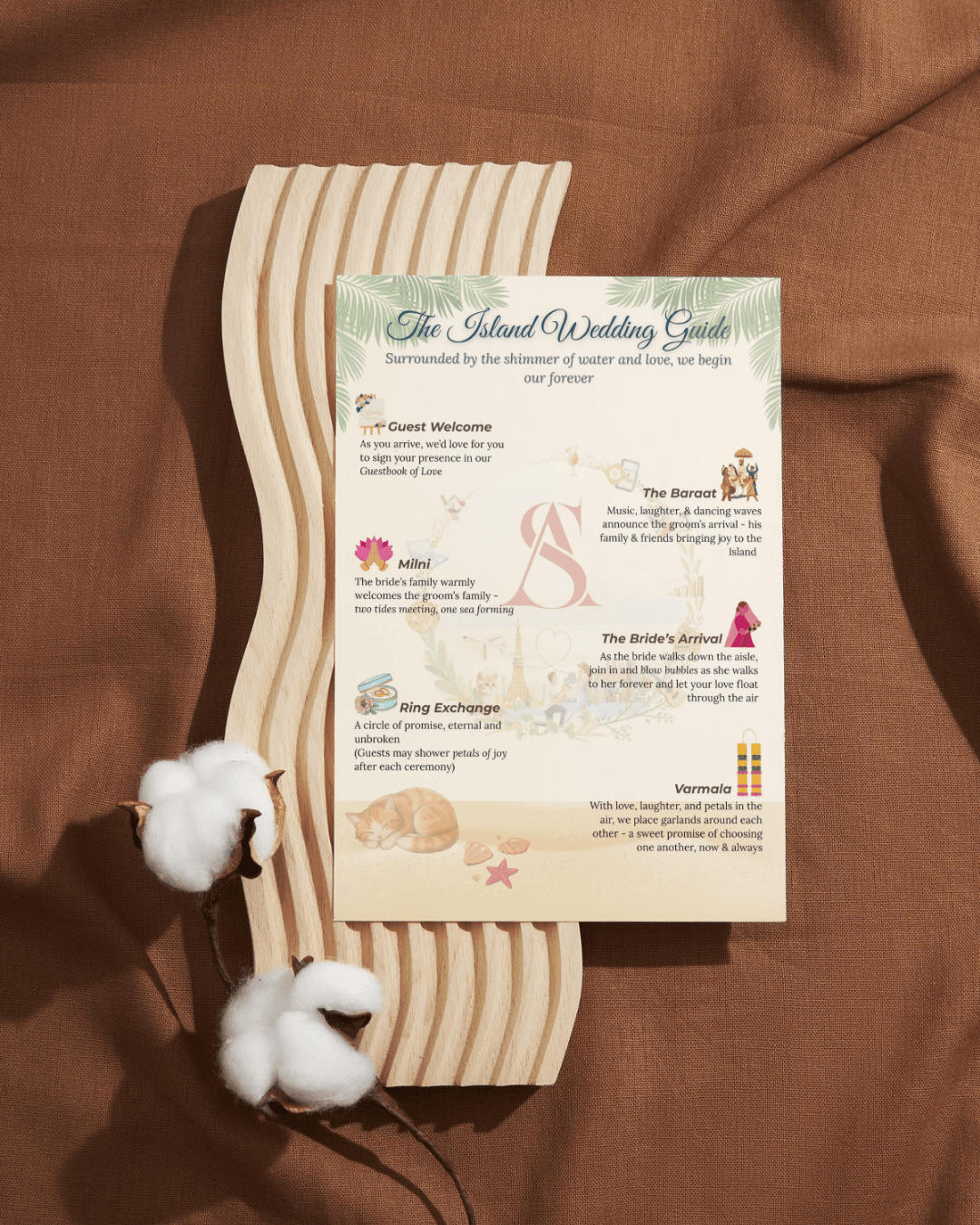
This was the day the ocean theme came fully to shore. Both Sakina and Aayush wore blue, she in a lehenga that broke from the traditional bridal red, he in a blue and beige sherwani, with a “Shades of the Ocean” dress code carrying the palette across every guest. The ceremony was built from scratch: a 4 Elements ritual gave each family a role, pouring coloured crystals into a shared vessel, and the couple signed a handmade, wax-sealed Declaration scroll, a shared promise in their own words, designed to be framed, not filed. A live painter captured it in real time; favours waited in small baskets; and a printed guide walked every guest through each ritual so no one felt like a spectator.
Day four · The reception
A Sapphire Renaissance.
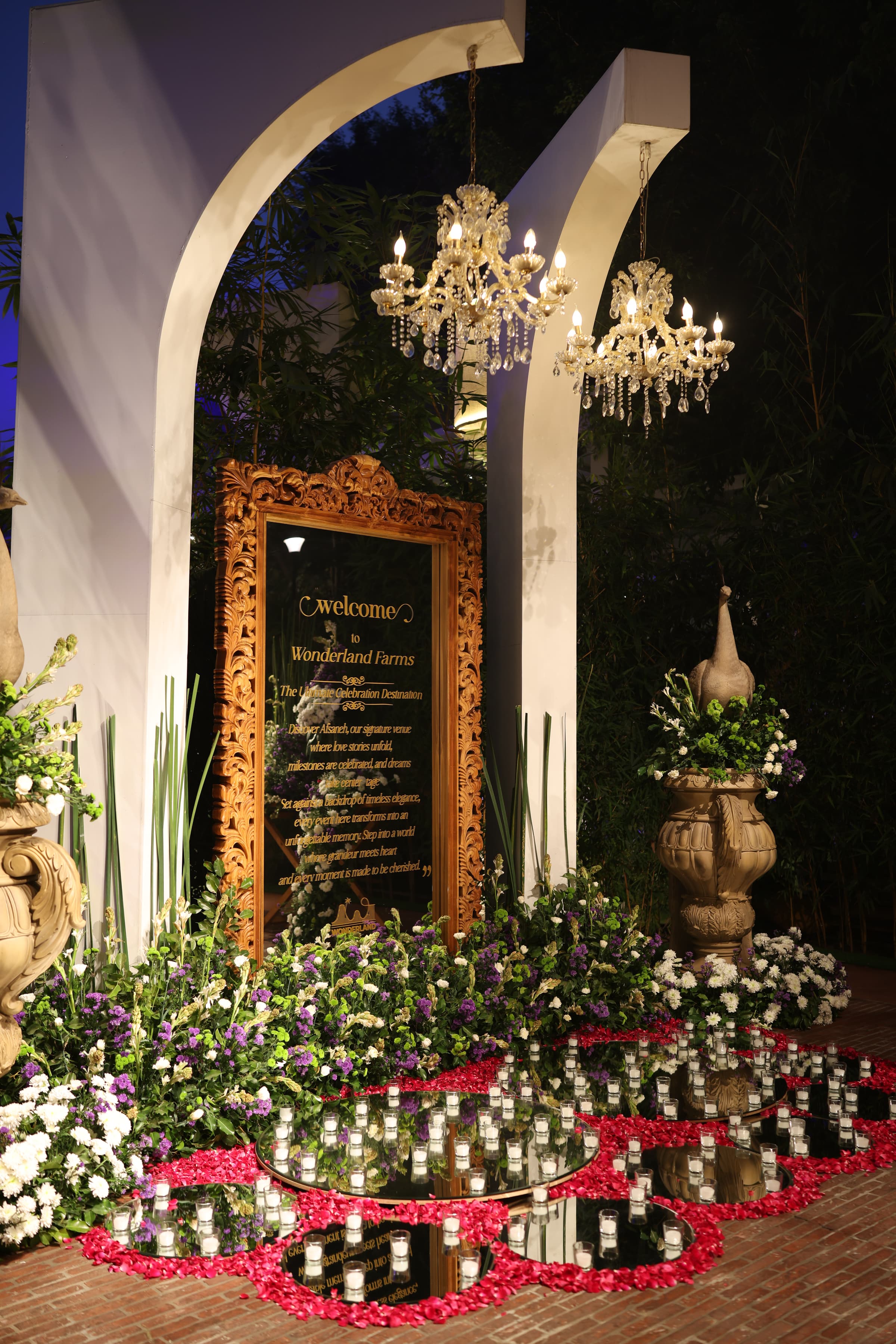
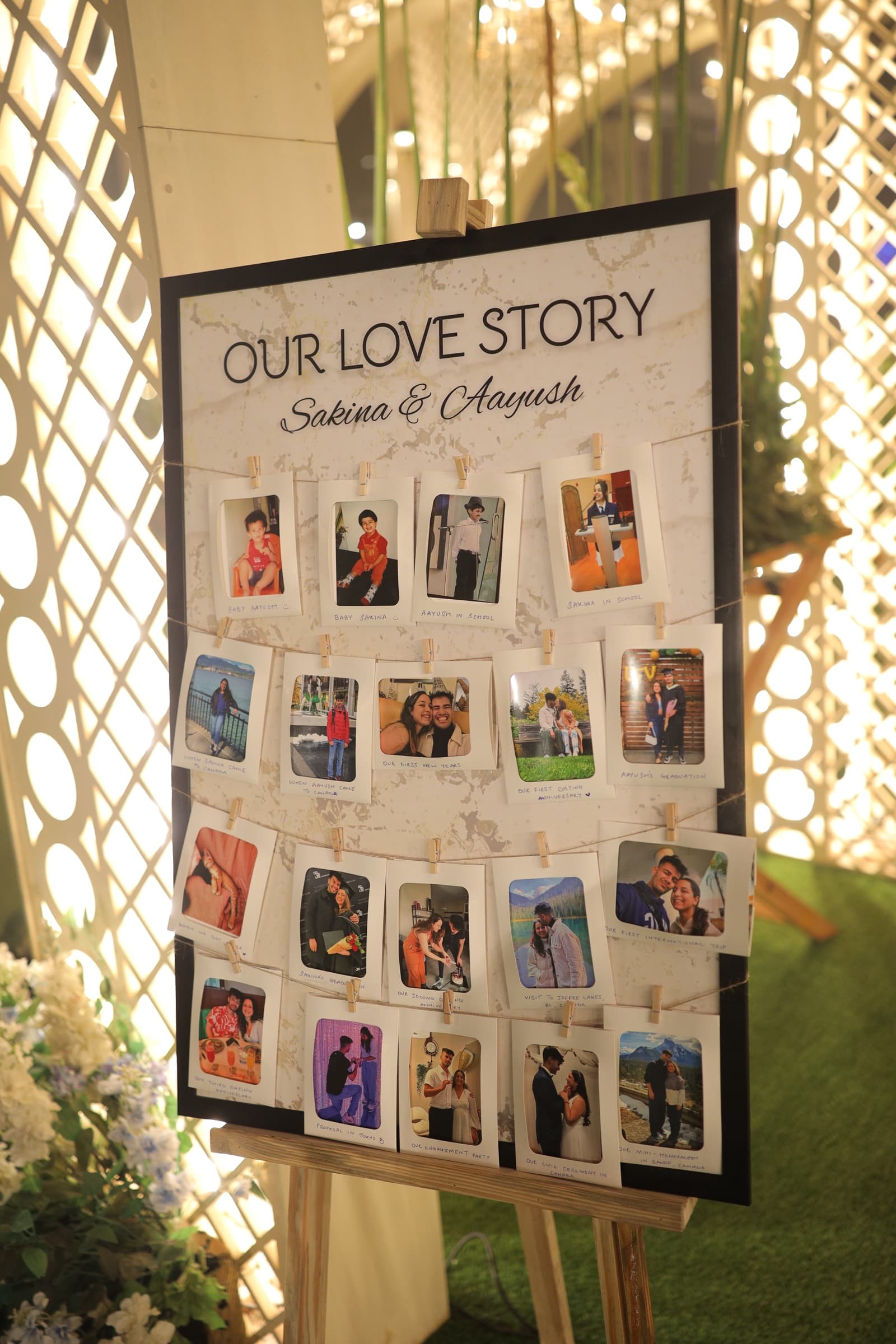
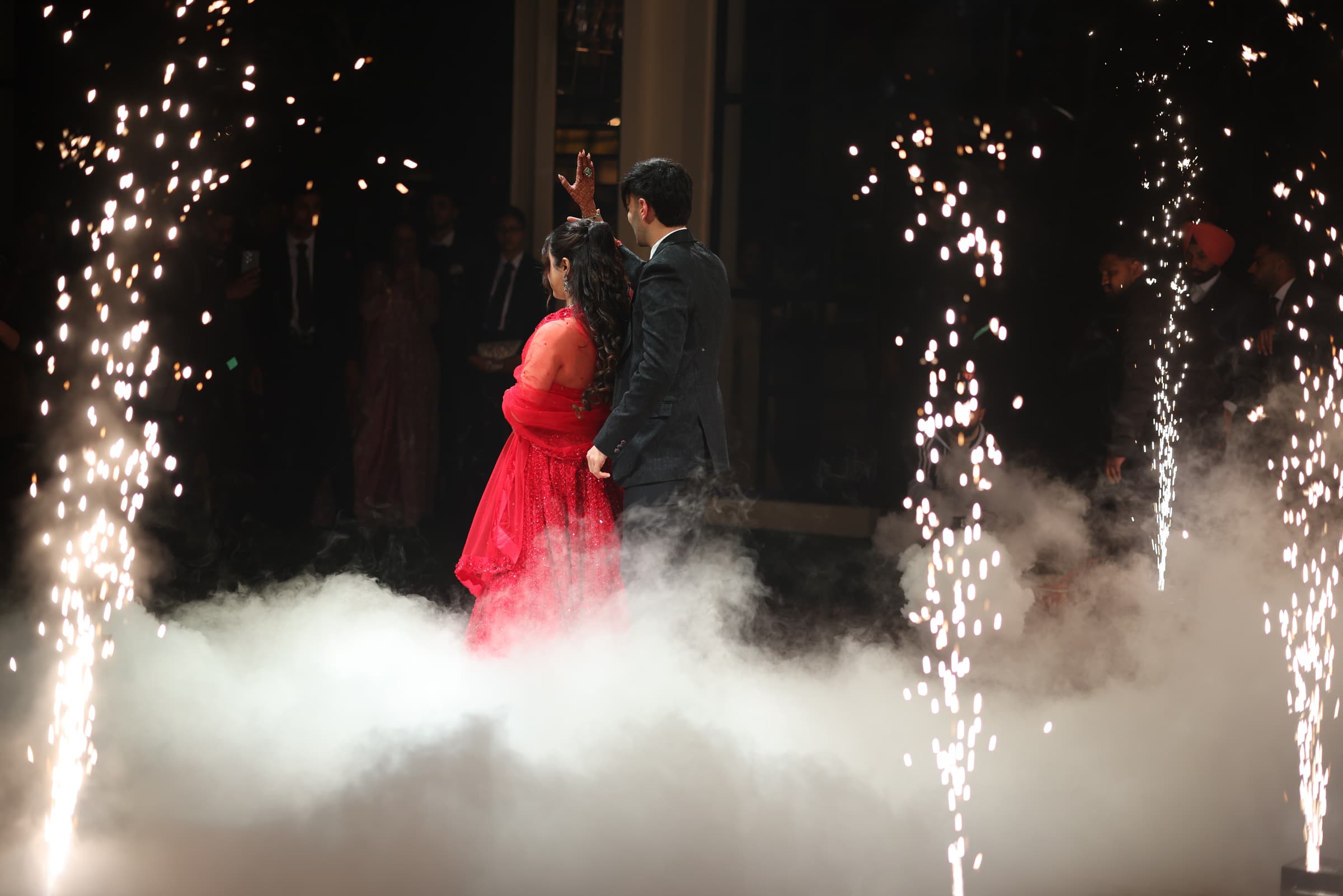
The final evening shifted the palette one last time, from oceanic blues to jewel tones, metallics, and rich darks. A saxophone set the atmosphere before the couple arrived, and when they did they skipped the traditional entry, walking in on a choreographed dance with smoke guns and the kind of energy that told the room the formalities were over. An “Our Love Story” polaroid board traced the couple from childhood to wedding day, and the last chapter of four days became the loudest.
The design suite
Every piece, drawn from one story.
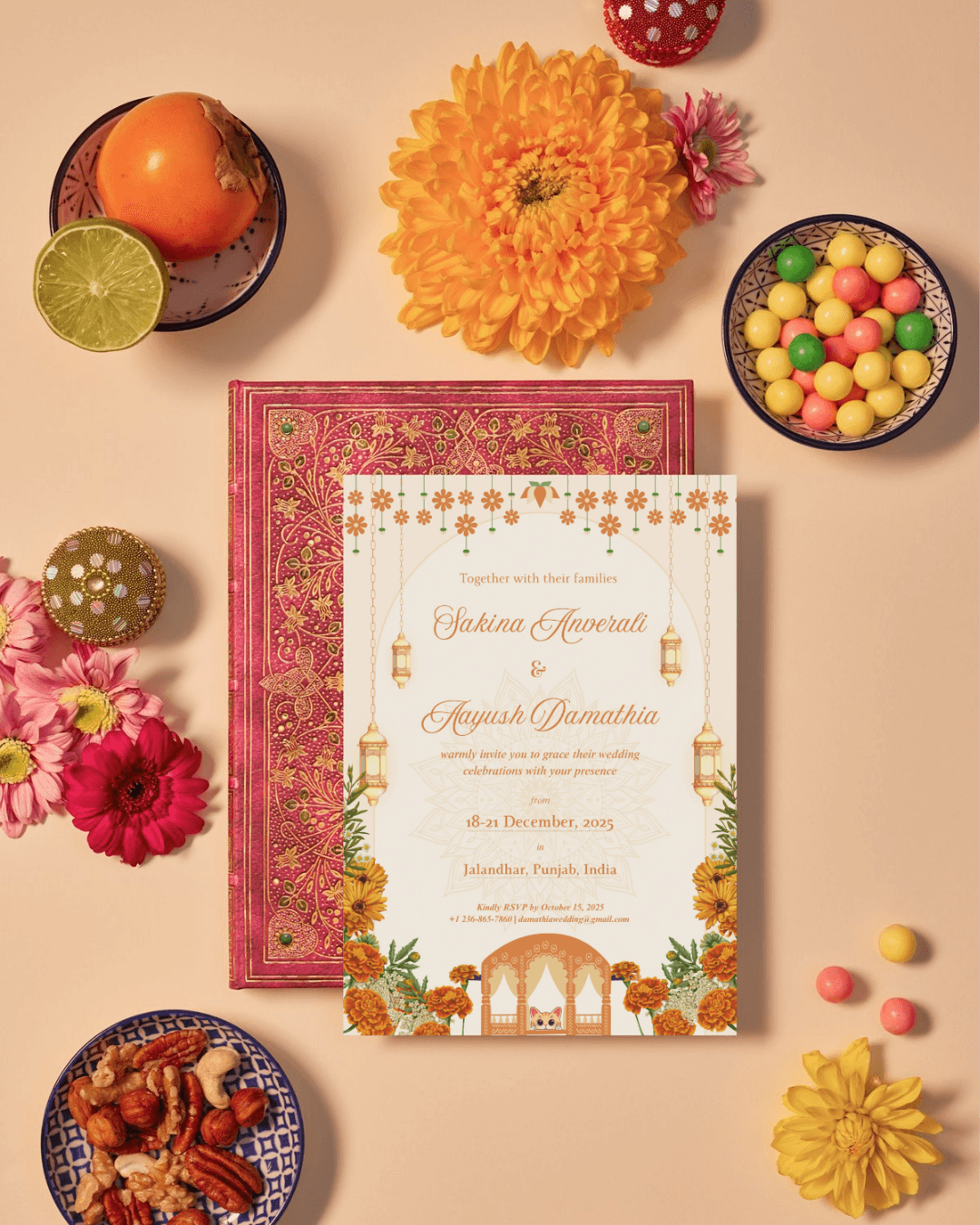
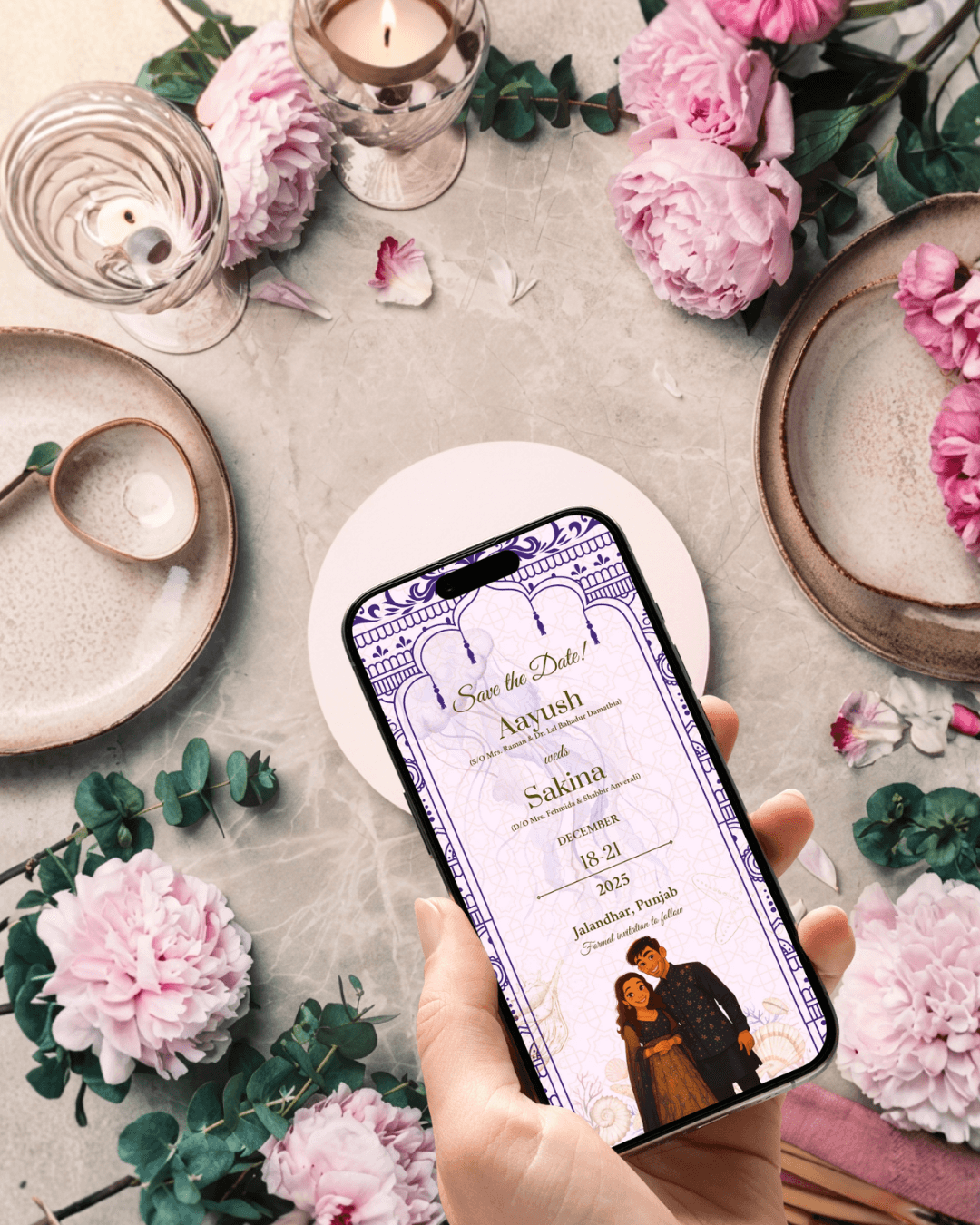
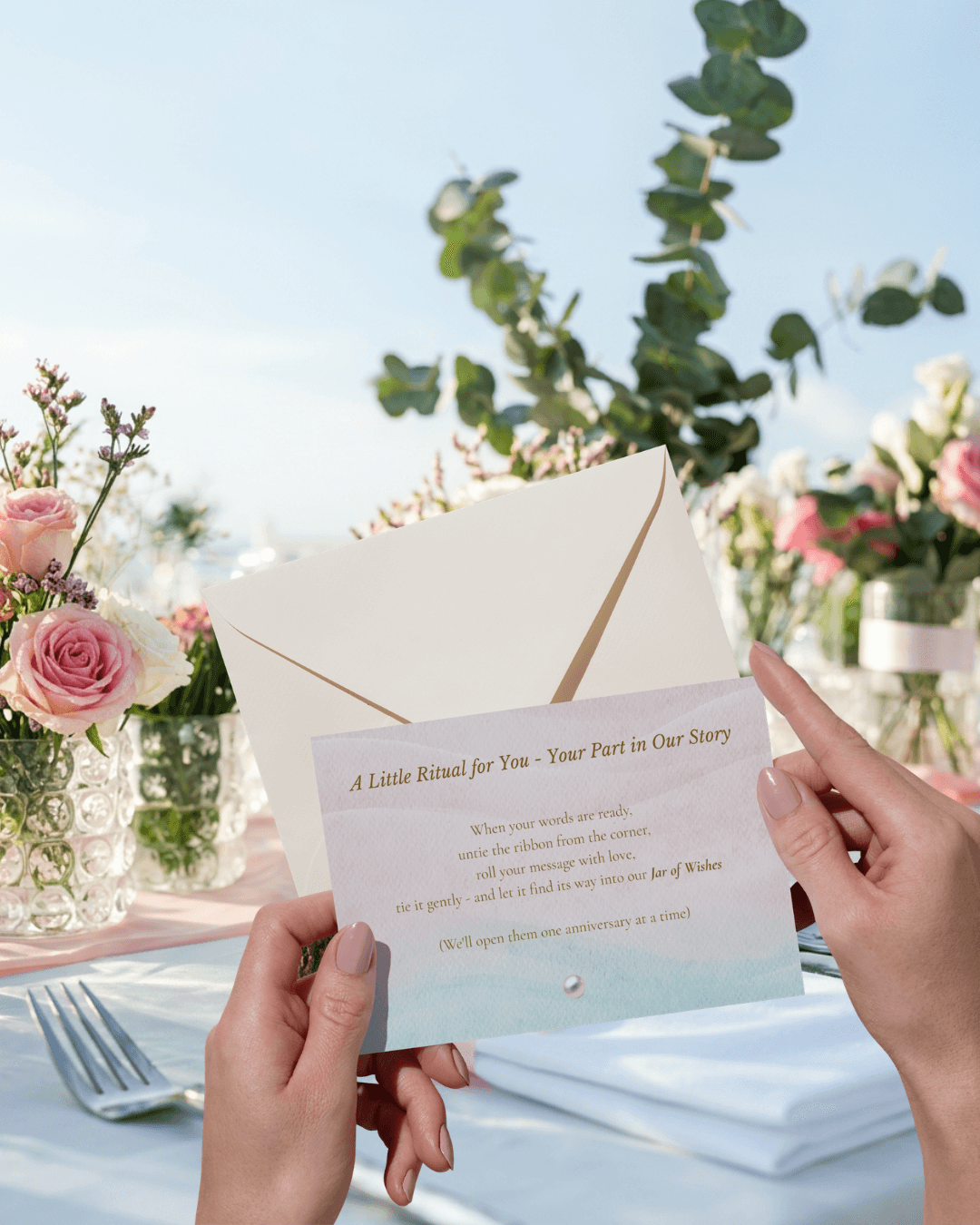
The printed and digital suite we designed across the four days.
The thinking behind the details.
A wedding’s visual language is a hundred small decisions that need to feel like one. Here’s how a few of them came together.
Why blue, not red.
Indian brides traditionally wear red. Sakina chose blue, her favourite colour and the thread that ran through the entire celebration, a deliberate choice to honour the theme and her identity over convention, while keeping the silhouette entirely traditional.
Why a bazaar, not a backdrop.
Most mehendis centre on a single statement wall. We argued for stalls instead, guests do something, take something home, and the day stays in their pockets long after the mehendi dries.
Why a scroll, not a contract.
The couple wanted a ceremony that honoured both families without belonging to either tradition. The wax-sealed Declaration scroll gave them a ritual object, a shared promise, without a religious or legal framework. Something you’d frame, not file.
Why the 4 Elements.
The ceremony needed structure without doctrine. Fire, water, earth, and air gave each family a role, pouring crystals, building something together, and made the ceremony participatory rather than performative.
Why bubbles at the aisle.
Flower petals are expected. Bubbles floating through the air as the bride walked down, childlike, sincere, joyful, created something no one saw coming in the middle of a deeply emotional ceremony.
“This was the project that started everything. Looking back, what mattered most wasn’t any single design piece, it was the feeling that every detail belonged together, and that every guest felt like they were part of the story, not watching from the outside.”
Chai & Champagne Studio